Announcement: Public Consultation for Child Rights Guidance Documents

Many children remain insufficiently protected and cannot enjoy their rights fully. In the palm oil setting, this can still be the case. Research has shown that children are affected in many ways, including access to quality and affordable education, nutritious food and healthy living environment, healthcare, justice, and other key social services, among other things.
With the current COVID-19 pandemic we are seeing far-reaching impacts on global supply chains, including the palm oil sector. The impacts of this crisis include its effect on the livelihoods of a large number of smallholder farmers. Across the sector, long-standing risks, such as child labour and forced labour, are likely to be exacerbated, as vulnerable families face increased pressures to make up for financial shortfalls. As plantation workers and smallholder farmers are often ill-equipped to deal with these situations, it can lead to both immediate and long-term negative socioeconomic consequences. Limited maternity protection, low breastfeeding rates, lack of childcare provisions, poor maternal health and nutrition during a pandemic such as this may further undermine the health and development of children in palm oil communities.
Accordingly, it is vital that children's rights are well-integrated into efforts that address both long-standing concerns in the palm oil sector, as well as those that may arise as a direct consequence of the Covid-19 pandemic.
In collaboration with the United Nations Children’s Fund (UNICEF), RSPO has commissioned the development of four guidance documents for the following key palm oil stakeholders, to strengthen child rights protection and improve compliance with the RSPO Principles and Criteria (P&C):
- Oil Palm Producers;
- Auditors and Certification Bodies;
- Smallholders and Group Managers; and
- Downstream Supply Chain Actors
These guidance documents provide tailored support and serve as an entry point for interventions that seek to minimise the potential negative consequences and improve the livelihoods of children and the communities in which they live.
The draft guidance documents are now open for public consultation for a period of thirty (30) days from 17 June to 17 July 2020.
You can download the draft guidance documents below and submit your feedback by accessing the following link.
Additionally, we will also be conducting a webinar on 25 June 2020 from 4.00 pm to 5.00 pm (GMT+8) on these guidance documents. Participation is open to all and you may register for the webinar here.
Keep reading

Test Voices
Public Consultation: PalmGHG V5 Manual
Malaysia National Interpretation Public Consultation: 25 July 2025 – 24 September 2025
India National Interpretation Public Consultation: 25 July 2025 – 24 September 2025
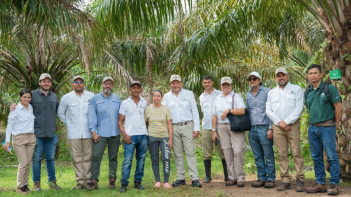
From Cocaine Processing to Cultivating Palm Oil: Resilience takes root in a Colombian community

Social Sustainability in Focus at the Europe Sustainable Palm Oil Dialogue
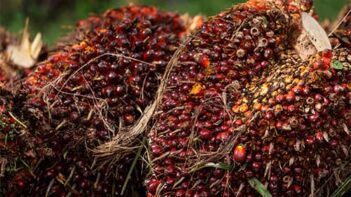
Cost-Benefit Analysis To Sourcing Sustainable Palm Oil in India
RT2025 Early Bird Sponsorship ends soon!